From Prompt Injection to AI Takeovers: How Hackers Are Exploiting the New Cybersecurity Battlefield

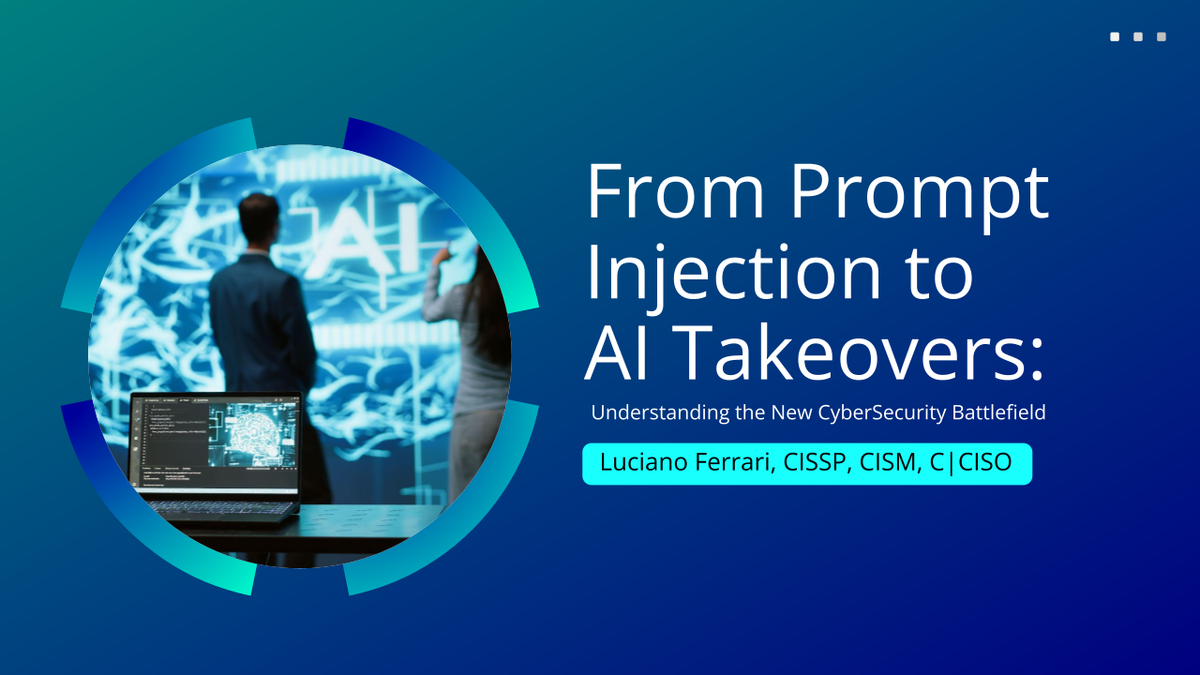
Artificial Intelligence is changing the face of cybersecurity — not tomorrow, but right now.
In my latest keynote, I unpack how attackers are already exploiting AI systems using prompt injections, data poisoning, and autonomous exploitation techniques, and why every security team needs to rethink their defenses.
🎥 Watch the full keynote here:
👉 From Prompt Injection to AI Takeovers: The New Cybersecurity Battlefield
AI is now deeply embedded in our workflows — copilots, chatbots, and data assistants touch sensitive information daily. But while AI has become smarter, its security hasn’t caught up.
Attackers have learned that they don’t need to exploit code anymore — they can exploit language.
This new era of “logic-layer hacking” means your AI model can be manipulated simply through creative prompts.
In the talk, I cover:
- How modern AI systems are being attacked through indirect prompt injection and hidden data manipulation.
- Real-world 2025 cases: EchoLeak in Microsoft Copilot, Gemini Trifecta attack, and Meta AI prompt leakage.
- How to red team AI systems and build resilient defenses before attackers do.
The key message:
“AI doesn’t have to be evil to be dangerous — it just has to be untested.”
At LufSec, in partnership with GetGlobal International, we’re building tools to help organizations test, secure, and audit AI systems.
If you want to see how AI security testing works in practice, check out:
👉 AI Risk Inspector — a framework for auditing models, analyzing risks, and measuring resilience across Security, Privacy, Ethics, and Copyright dimensions.
AI is rewriting the cybersecurity playbook. The question isn’t if it’ll be targeted — it’s when.
Now is the time to build security maturity before attackers do.
🔒 Watch the full keynote👇